

Nicolas Fressengeas
boosted

Do you know about the OJS / OPS Dataverse plugin?
It enables the integration of #OpenJournalSystems and #OpenPreprintSystems with a #Dataverse repository, allowing authors to submit #ResearchData associated with their manuscripts during the submission process to the #journal or #preprint server.
Article, community call recording, and news: https://forum.pkp.sfu.ca/t/article-about-the-dataverse-ojs-ops-3-integration-plugin/97697
The plugin itself: https://github.com/lepidus/dataversePlugin/
Do you know about the OJS / OPS Dataverse plugin?
It enables the integration of #OpenJournalSystems and #OpenPreprintSystems with a #Dataverse repository, allowing authors to submit #ResearchData associated with their manuscripts during the submission process to the #journal or #preprint server.
Article, community call recording, and news: https://forum.pkp.sfu.ca/t/article-about-the-dataverse-ojs-ops-3-integration-plugin/97697
The plugin itself: https://github.com/lepidus/dataversePlugin/

🙌 Want to join researchers from all over the world to improve a #preprint on AI use in healthcare?
Registration is now open for the PREreview + JMIR Publications Live Review.
✍️ Sign up here: bit.ly/live-review-jan-23


#aiXiv is a new #preprint repository accepting works generated entirely by #AI.
https://aixiv.science/
It also accepts works by humans and works co-authored by humans and #AI in any ratio. It subjects new submissions to preliminary review done entirely by AI.
Celina Zhao has a good article about it in Science.
https://www.science.org/content/article/new-preprint-server-welcomes-papers-written-and-reviewed-ai
"Says Guowei Huang, one of aiXiv’s creators, 'We should only care about quality—not who produced it.' … [Other preprint] servers, like most conferences and journals, still bar naming AI systems as authors —a stance that inadvertently pushes researchers to use AI without saying so. Huang calls that lack of transparency 'totally unacceptable.'”
Will Tuladhar-Douglas
and 1 other
boosted
Thats great! 416 experienced qualitative researchers from 38 countries reject the use of generative artificial intelligence (GenAI) applications for Big Q Qualitative approaches, such as reflexive thematic analysis, or various phenomenological approaches.
They describe three primary reasons for the rejection:
1. GenAI as simulated intelligence is incapable of meaning making
2. Qualitative research should remain a distinctly human practice
3. The established manifold harms of GenAI, especially to the environment and workers in the Global South
"[...] the algorithmic patterns upon which GenAI operates predisposes GenAI to identify, replicate and reinforce dominant language and patterns; risking the further quieting of marginal voices and practices, including those of critical scholars. The voices and practices of people who live/breathe/feel/imagine/construct knowledge in the maroons of life – along with their stunning/quirky/complex/unpredictable ways – may be lost or worse; sacrificed."
https://papers.ssrn.com/sol3/papers.cfm?abstract_id=5676462
#PositionStatement #Preprint #GenAI #NoGenAI #QualitativeResearch #Research #Science #BigQ

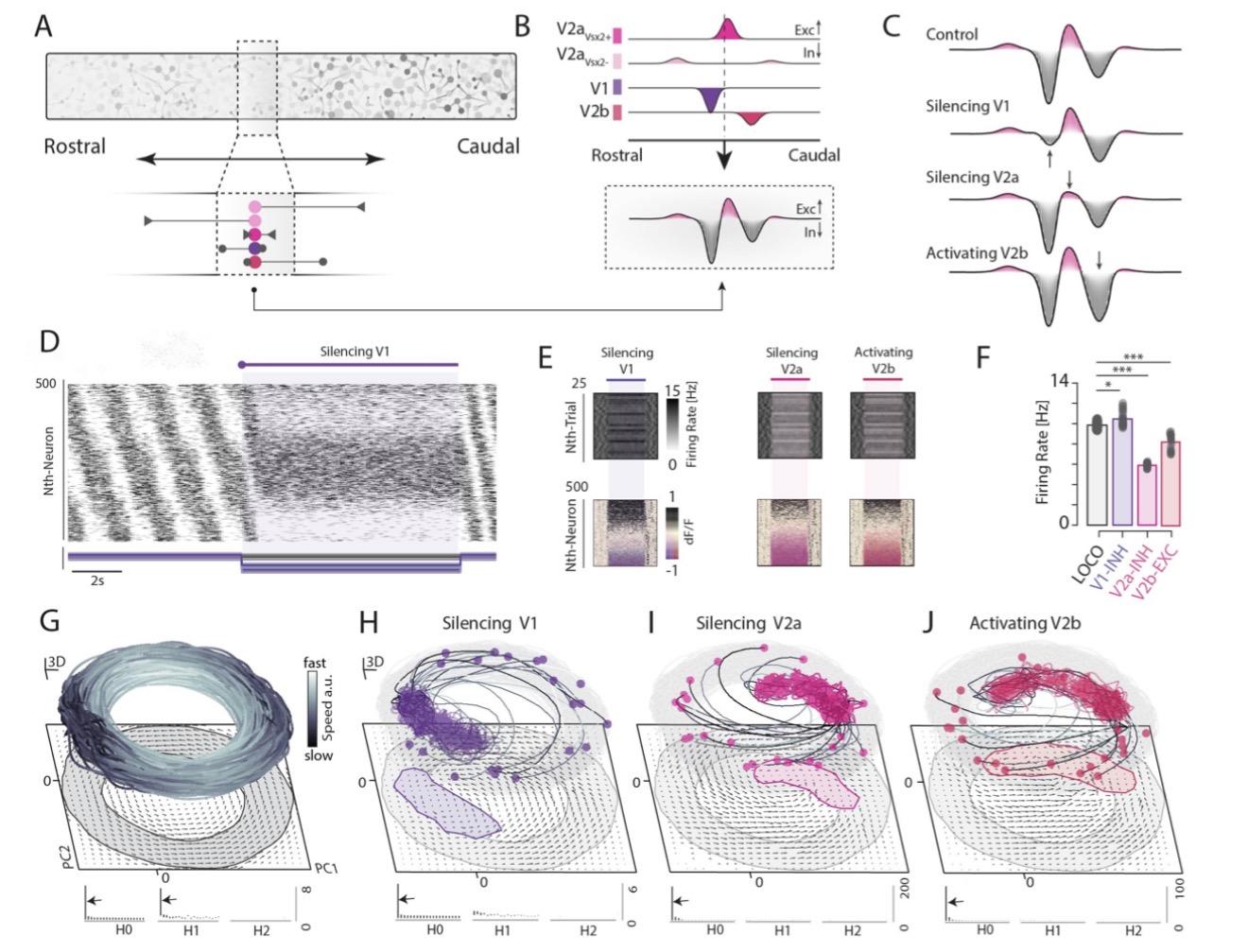
🧠 New #preprint by Komi et al. (2025): Neural #manifolds that orchestrate walking and stopping. Using #Neuropixels recordings from the lumbar spinal cord of freely walking rats, they show that #locomotion arises from rotational #PopulationDynamics within a low-dimensional limit-cycle #manifold. When walking stops, the dynamics collapse into a postural manifold of stable fixed points, each encoding a distinct pose.


"It's a fundamental shift in how scholarly discussions can work. When you start a discussion on Sciety, that conversation becomes part of the Fediverse, discoverable and participatory for researchers on our preprint focussed bonfire instance (discussions.sciety.org) and, if you choose, other Bonfire instances, Mastodon, any platform that speaks the ActivityPub protocol and Bluesky (via bridging functionality).
#MarkWilliams, 2025
https://blog.sciety.org/bridging-preprints-and-the-fediverse/

Thats great! 416 experienced qualitative researchers from 38 countries reject the use of generative artificial intelligence (GenAI) applications for Big Q Qualitative approaches, such as reflexive thematic analysis, or various phenomenological approaches.
They describe three primary reasons for the rejection:
1. GenAI as simulated intelligence is incapable of meaning making
2. Qualitative research should remain a distinctly human practice
3. The established manifold harms of GenAI, especially to the environment and workers in the Global South
"[...] the algorithmic patterns upon which GenAI operates predisposes GenAI to identify, replicate and reinforce dominant language and patterns; risking the further quieting of marginal voices and practices, including those of critical scholars. The voices and practices of people who live/breathe/feel/imagine/construct knowledge in the maroons of life – along with their stunning/quirky/complex/unpredictable ways – may be lost or worse; sacrificed."
https://papers.ssrn.com/sol3/papers.cfm?abstract_id=5676462
#PositionStatement #Preprint #GenAI #NoGenAI #QualitativeResearch #Research #Science #BigQ
Egon Willigh☮gen 🟥
boosted

our preview website has been revamped: https://preview.biohackrxiv.org/

our preview website has been revamped: https://preview.biohackrxiv.org/
PREreview
boosted
This #PeerReviewWeek why not join a collaborative, Live Review, hosted by @prereview and @JMIRPub to provide feedback to a #preprint?
WHEN: Sep 18, 2025, at 08:00 PT / 11:00 ET / 15:00 UTC
WHAT: Join a 90-minute collaborative discussion of the following preprint
‘Interactive Evaluation of an Adaptive-Questioning Symptom Checker Using Standardized Clinical Vignettes’
DOI: https://doi.org/10.1101/2025.08.21.25333628
WHERE: Zoom - https://bit.ly/sep18-LiveReview

Join our @span prereview Champions Team and the @span eLife Ambassadors this #PeerReviewWeek to collaboratively review a #preprint.
When: Friday, September 19 at 3pm UTC
What: A 90-minute discussion of this preprint '‘Comparing the outputs of intramural and extramural grants funded by National Institutes of Health’ (DOI: https://doi.org/10.1101/2023.11.09.56629)
Where: Zoom, sign up to register at: https://bit.ly/Sep19-Live-Review

This #PeerReviewWeek why not join a collaborative, Live Review, hosted by @prereview and @JMIRPub to provide feedback to a #preprint?
WHEN: Sep 18, 2025, at 08:00 PT / 11:00 ET / 15:00 UTC
WHAT: Join a 90-minute collaborative discussion of the following preprint
‘Interactive Evaluation of an Adaptive-Questioning Symptom Checker Using Standardized Clinical Vignettes’
DOI: https://doi.org/10.1101/2025.08.21.25333628
WHERE: Zoom - https://bit.ly/sep18-LiveReview
Olivia Guest · Ολίβια Γκεστ
boosted

Excellent new #preprint by @olivia about the dangers of mindless #AI use in science and education: https://philpapers.org/versions/GUEATU
Really makes you see those google gemini ads in which humans are depicted as incompetent nincompoops who don't know how sink siphons or smelling things to assess whether they're spicy or not work in a new light.
Excellent new #preprint by @olivia about the dangers of mindless #AI use in science and education: https://philpapers.org/versions/GUEATU
Really makes you see those google gemini ads in which humans are depicted as incompetent nincompoops who don't know how sink siphons or smelling things to assess whether they're spicy or not work in a new light.

I will never understand why the authors of a manuscript that they post on a preprint server spontaneously decide that it will be better for whoever reads their manuscript to have not only all the figures at the end, but also separated from the legends?
WHY 😭
(Same question for papers sent to review btw. Most journals allow for the format of your choice for the first submission. WHY not make it a nice, easily readable format??)
#ScientificJournals#ResearchPapers#Academia#Preprint#PeerReview
Nicolas Fressengeas
boosted

Trop gros, trop cher, trop moche..., le système de publications scientifiques est à bout de souffle. Un article de "niche" pour passer un bon été :https://www.lemonde.fr/sciences/article/2025/07/07/le-monde-des-revues-scientifiques-au-bord-de-l-asphyxie_6619660_1650684.html
(allez au bout car il y a des messages d'espoirs...)
et en bonus, un "appui" sur l'usage de l'IA qui n'arrange rien,
https://www.lemonde.fr/sciences/article/2025/07/07/comment-l-ia-bouscule-les-publications-scientifiques_6619655_1650684.html
#science #preprint #recherche #pci #pubpeer #matilda #openaccess #retraction
@BorisBarbour @enroweb @ElisabethBik
Trop gros, trop cher, trop moche..., le système de publications scientifiques est à bout de souffle. Un article de "niche" pour passer un bon été :https://www.lemonde.fr/sciences/article/2025/07/07/le-monde-des-revues-scientifiques-au-bord-de-l-asphyxie_6619660_1650684.html
(allez au bout car il y a des messages d'espoirs...)
et en bonus, un "appui" sur l'usage de l'IA qui n'arrange rien,
https://www.lemonde.fr/sciences/article/2025/07/07/comment-l-ia-bouscule-les-publications-scientifiques_6619655_1650684.html
#science #preprint #recherche #pci #pubpeer #matilda #openaccess #retraction
@BorisBarbour @enroweb @ElisabethBik