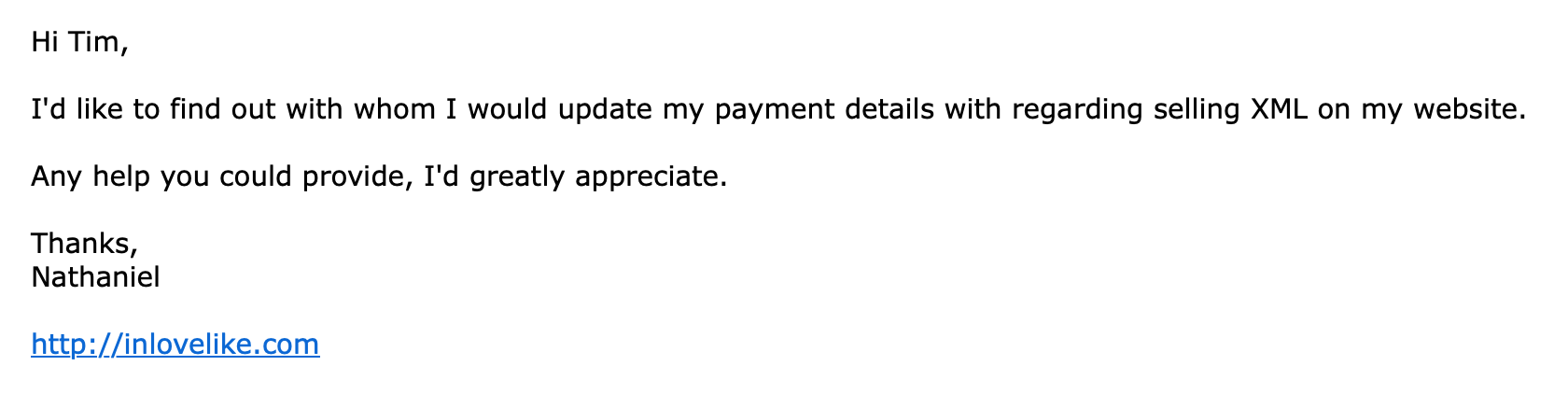
I mean, spam sucks obviously, but occasionally one leaks through the filters that makes me smile.
There’s a URL in the signature which I whimsically followed, the headline there is: “The place where you can build and buy a whole qubit.”
#Tag
I mean, spam sucks obviously, but occasionally one leaks through the filters that makes me smile.
There’s a URL in the signature which I whimsically followed, the headline there is: “The place where you can build and buy a whole qubit.”
The difference between XMPP and ActivityPub, explained through the Blog feature 🗒️✨
Movim provides a quick comparison between the two protocols and shows how blogs work. Wow, this makes so much more sense than ActivityPub tbh. There's also a good example of XML strength: embedding an Atom feed in XMPP messages.
The difference between XMPP and ActivityPub, explained through the Blog feature 🗒️✨
Movim provides a quick comparison between the two protocols and shows how blogs work. Wow, this makes so much more sense than ActivityPub tbh. There's also a good example of XML strength: embedding an Atom feed in XMPP messages.
While reading this post on what we lost with the abandonment of XML this passage caught my Lisper eye:
XML's structure is immediately familiar. It is essentially s-expressions with angle brackets instead of parentheses. An element is a tagged list; attributes are metadata; nesting is composition.
While reading this post on what we lost with the abandonment of XML this passage caught my Lisper eye:
XML's structure is immediately familiar. It is essentially s-expressions with angle brackets instead of parentheses. An element is a tagged list; attributes are metadata; nesting is composition.
@amoroso XML with all its components and standards around has always been a parallel universe. XML has been widely misused for purposes that shouild have never seen any XML at all. In addition to that, techniques like XSLT or XPath have been widely considered as academic and non-approachable. XML knowledge has always been dominion knowledge. I've been to several XML conference (XML Prague, #XML London,Markup UK) and the high academic speaks for itself. XML & Co. appeared stimes like brainfuck.
While reading this post on what we lost with the abandonment of XML this passage caught my Lisper eye:
XML's structure is immediately familiar. It is essentially s-expressions with angle brackets instead of parentheses. An element is a tagged list; attributes are metadata; nesting is composition.
Just realized that #HTML is extensible and #Markdown isn't.
HTML's #XML-like syntax allows for arbitrary non-standard tags that can be made sense of later, in the parser / scraper / renderer. Or animated with #JavaScript custom elements API. Note that I only mention XML syntax, not its semantics, with all the domains, schemes, namespaces, and imports of ontologies or whatever. I just talk random user-specific tags. That's more than enough for reliable ad-hoc extensibility if the syntax is uniform. And HTML syntax is uniform.
While Markdown syntax is not. It's arbitrary (and it doesn't consider the conventions that came before it: https://aartaka.me/email-formatting.html, but I digress) and thus extensions have to come up with random syntaxes for their custom entities. Which wont look good across Markdown renderers supporting the new syntax and the ones that don't. Especially given that new syntaxes (for whatever reason) always are quite ugly.
HTML will just treat new tags' contents as new blocks (legacy) or phrases (more modern), which is much more reliable than seeing a symbol soup in the rendered Markdown.
Just realized that #HTML is extensible and #Markdown isn't.
HTML's #XML-like syntax allows for arbitrary non-standard tags that can be made sense of later, in the parser / scraper / renderer. Or animated with #JavaScript custom elements API. Note that I only mention XML syntax, not its semantics, with all the domains, schemes, namespaces, and imports of ontologies or whatever. I just talk random user-specific tags. That's more than enough for reliable ad-hoc extensibility if the syntax is uniform. And HTML syntax is uniform.
While Markdown syntax is not. It's arbitrary (and it doesn't consider the conventions that came before it: https://aartaka.me/email-formatting.html, but I digress) and thus extensions have to come up with random syntaxes for their custom entities. Which wont look good across Markdown renderers supporting the new syntax and the ones that don't. Especially given that new syntaxes (for whatever reason) always are quite ugly.
HTML will just treat new tags' contents as new blocks (legacy) or phrases (more modern), which is much more reliable than seeing a symbol soup in the rendered Markdown.
Announcing Jabboratory, a partner collective of @joinjabber
Jabboratory aims to be for the people who already have an XMPP account and want to help improve XMPP and the Jabber network.
We use the same CoC as JoinJabber and all the same governance documents. All of them being by Vojkruco https://codeberg.org/Vojkruco/Cooperative_Development_Guidelines and we are hosted under the Vojkruco umbrella.
Some of the things we do are:
- specifications (called XCSPs in Jabboratory),
- developer help/documentation and implementation collaboration
- improve XMPP/Jabber network socially (safer spaces, blocklists, outreach, organizing events, pushing for a better non-tech culture, etc.)
or anything else that includes improving XMPP and Jabber network as a whole.
We aim for diversity of ideas, include people directly in all aspects of decision making (protocol, implementations, social, etc.) and build a space where people feel safe to talk, ask for help, bring up any kind of ideas and work with others to implement said ideas. By the community for the community with inclusive decision making to serve the people affected.
you are welcome to join our lounge room here -> https://invite.joinjabber.org/#lounge@chat.jabboratory.org%3Fjoin
It is strictly non-tech because we aim for inclusivity, but we do of course have other channels some of them being tech related🙂
We already have some implementations, servers, and XMPP collectives involved (including JoinJabber) and we are all building a better XMPP and Jabber network together 🙂
#xmpp #jabber #xml #SecureMessaging #decentralization #privacy #security #federated #jabboratory
Announcing Jabboratory, a partner collective of @joinjabber
Jabboratory aims to be for the people who already have an XMPP account and want to help improve XMPP and the Jabber network.
We use the same CoC as JoinJabber and all the same governance documents. All of them being by Vojkruco https://codeberg.org/Vojkruco/Cooperative_Development_Guidelines and we are hosted under the Vojkruco umbrella.
Some of the things we do are:
- specifications (called XCSPs in Jabboratory),
- developer help/documentation and implementation collaboration
- improve XMPP/Jabber network socially (safer spaces, blocklists, outreach, organizing events, pushing for a better non-tech culture, etc.)
or anything else that includes improving XMPP and Jabber network as a whole.
We aim for diversity of ideas, include people directly in all aspects of decision making (protocol, implementations, social, etc.) and build a space where people feel safe to talk, ask for help, bring up any kind of ideas and work with others to implement said ideas. By the community for the community with inclusive decision making to serve the people affected.
you are welcome to join our lounge room here -> https://invite.joinjabber.org/#lounge@chat.jabboratory.org%3Fjoin
It is strictly non-tech because we aim for inclusivity, but we do of course have other channels some of them being tech related🙂
We already have some implementations, servers, and XMPP collectives involved (including JoinJabber) and we are all building a better XMPP and Jabber network together 🙂
#xmpp #jabber #xml #SecureMessaging #decentralization #privacy #security #federated #jabboratory
ActivityPub would have been better if it used XML instead of JSON.
/duck
ActivityPub would have been better if it used XML instead of JSON.
/duck
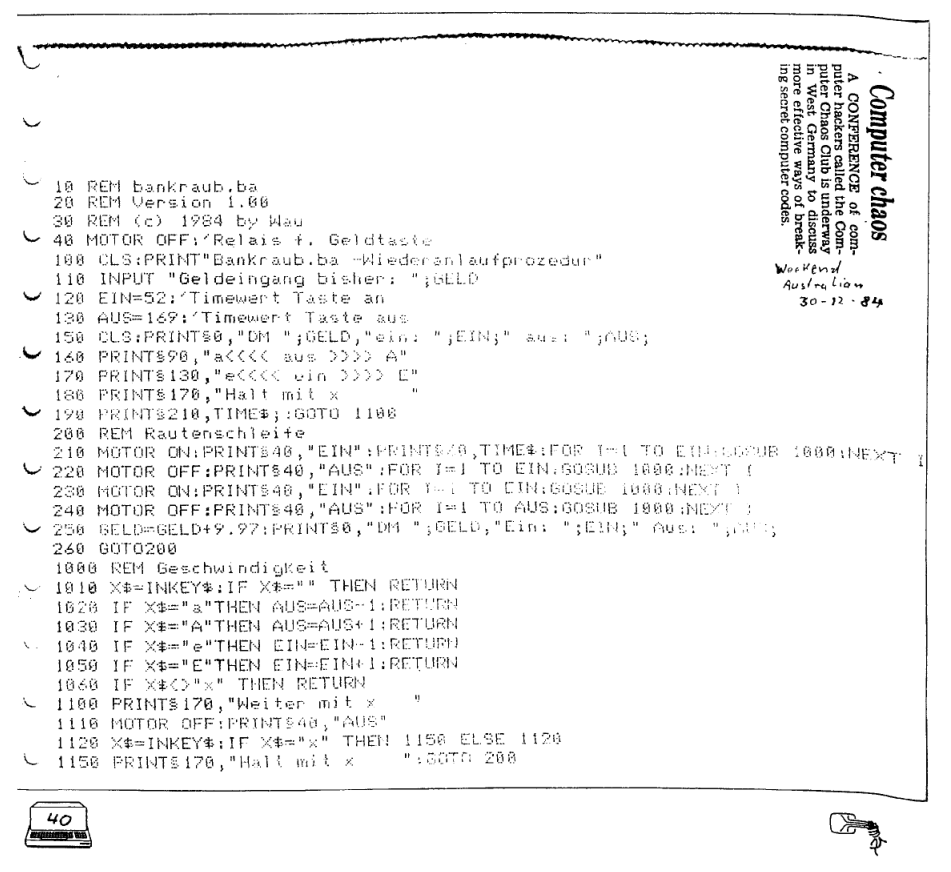
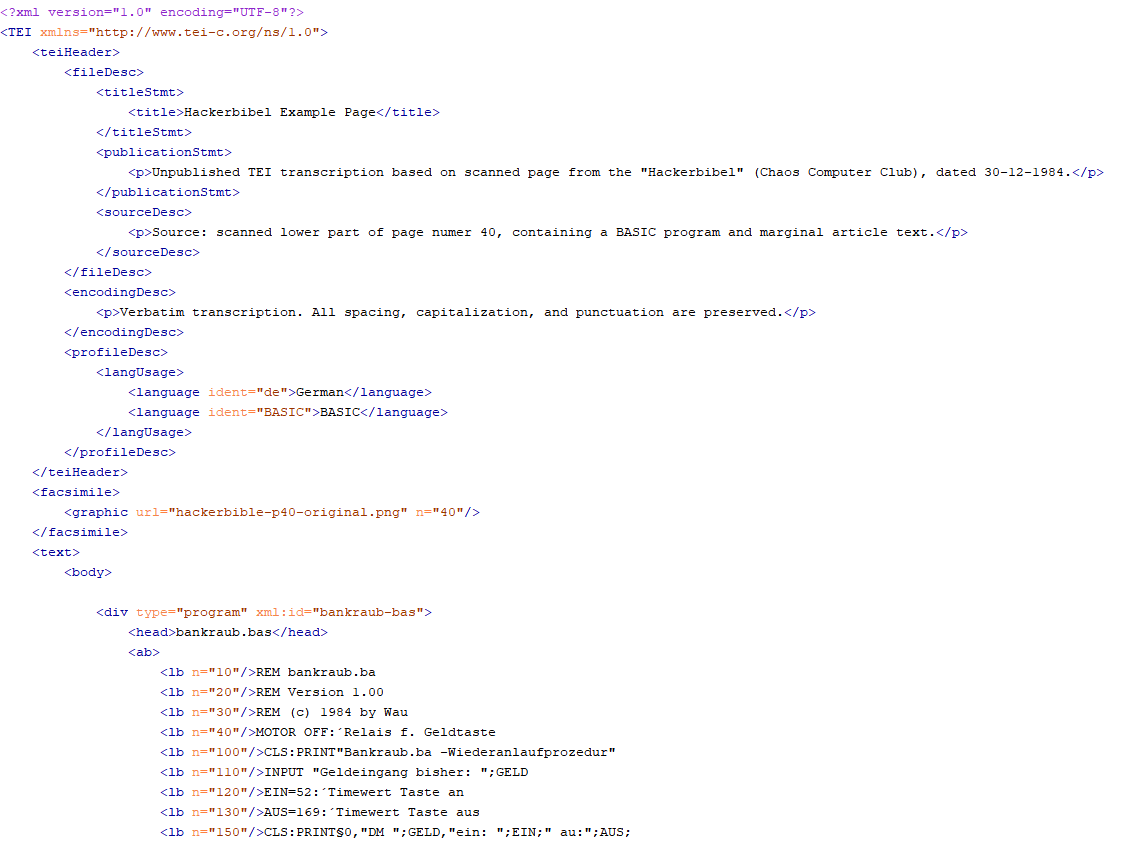
What You Hack Is What You Mean: My #TEI talk at #39C3 will elaborate on how to turn literature, research, and even hacker lore into machine-readable, remixable, and sustainable data by using the guidelines of the Text Encoding Initiative. https://events.ccc.de/congress/2025/hub/de/event/detail/what-you-hack-is-what-you-mean-35-years-of-wiring-sense-into-text #DigitalHumanities #XML
#XML people!
How do we communicate the idea that declarative markup is a good idea? Declarative markup is where you identify what is there, not what it does.
For an internal memo, for an insurance letter to a client, how much matters? Well, the insurance company has to be able to search the letters for specific information for 10, 20, 40, 100 years. What word processor did you use 40 years ago? Wordstar? Magic Wand? Ventura?
What You Hack Is What You Mean: My #TEI talk at #39C3 will elaborate on how to turn literature, research, and even hacker lore into machine-readable, remixable, and sustainable data by using the guidelines of the Text Encoding Initiative. https://events.ccc.de/congress/2025/hub/de/event/detail/what-you-hack-is-what-you-mean-35-years-of-wiring-sense-into-text #DigitalHumanities #XML
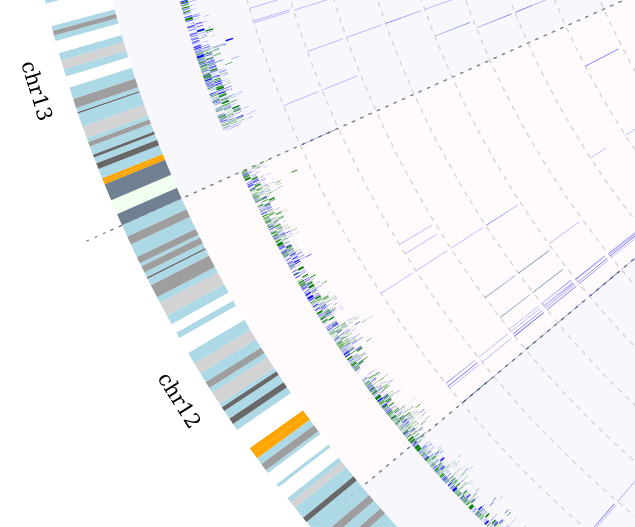
Playing with XML+XSLT=SVG because I just hate circos.
Playing with XML+XSLT=SVG because I just hate circos.
Slow Horses screen grab, gotta love it.