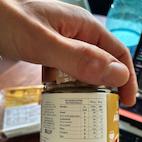
An abandoned laboratory in Poland, once part of an agricultural research institute.
Most buildings have been stripped, but one laboratory room still holds scattered glassware, faded chemical bottles, and some older equipment. A few machines remain, as well as some crunchy dead plants.
A nice location to explore solo and take some time photographing some details.
#Poland #Abandoned #Opuszczone #Photography #AbandonedPlaces #Science #Laboratory #Urbex #UrbanExploration
An abandoned laboratory in Poland, once part of an agricultural research institute.
Most buildings have been stripped, but one laboratory room still holds scattered glassware, faded chemical bottles, and some older equipment. A few machines remain, as well as some crunchy dead plants.
A nice location to explore solo and take some time photographing some details.
#Poland #Abandoned #Opuszczone #Photography #AbandonedPlaces #Science #Laboratory #Urbex #UrbanExploration
For the first time since 1972, humans are headed back toward the Moon ๐
NASAโs Artemis II will send 4 astronauts on a 10-day journey around the Moon to test critical systems and pave the way for a future lunar landing.
https://theconversation.com/nasas-artemis-ii-plans-to-send-a-crew-around-the-moon-to-test-equipment-and-lay-the-groundwork-for-a-future-landing-273688
#space #science
RE: https://mstdn.social/@Tiylaya/115954874077969692
In case anyone missed it last week... #StarTrek #Exoplanets #Science #ScienceFiction
Today in the #CosmicStories blog, we take a look at the #ScienceandSF of #Exoplanets through the lens of a case study: #StarTrek and its spin offs. Featuring #astronomy, #ScienceFiction, desert worlds, water planets, giants, and lots of Star Trek. Comments welcome!
RE: https://mstdn.social/@Tiylaya/115954874077969692
In case anyone missed it last week... #StarTrek #Exoplanets #Science #ScienceFiction
Today in the #CosmicStories blog, we take a look at the #ScienceandSF of #Exoplanets through the lens of a case study: #StarTrek and its spin offs. Featuring #astronomy, #ScienceFiction, desert worlds, water planets, giants, and lots of Star Trek. Comments welcome!
February 15th is Torontohenge, when druids ascend Bloor Street and Chthonic Old Ones stalk The Danforth
Rx Inspector, our free, searchable tool, allows you to look up where your generic prescription drug was made.
From patients and doctors to researchers, it is already reshaping how people make decisions. โThis is a godsend,โ one professor told us.
https://www.propublica.org/article/rx-inspector-reshaping-decisions-generic-drugs?utm_source=mastodon&utm_medium=social&utm_campaign=mastodon-post
#Research #Data #Science #Medicine #Pharmacy #Journalism #Drugs
Honestly I'm extremely worried about the state of U.S. #science, because of decades of computerization. "Science software" doesn't actually have to be written by people who understand science *at all*, so how can any honest scientist actually _trust_ such software? On what possible basis can such trust in scientific software reside?
Corporate #software has effectively exempted itself from needing to work properly. Merely by using the software, usually you're also tacitly agreeing (via dodgy "end-user license" terms) that the software vendor isn't responsible for a defective or malfunctioning product. _Caveat emptor_, they say: let the buyer beware. (And if you don't like it then go write your own software, you ungrateful n00b!)
(cont'd)
Insidiously, more and more of the routine functions of scientific experimentation have been computerized and even *automated*, and that's actually very bad for #science. The overuse of #software and computer simulation in science is driving a wedge between the scientists and the direct perception and observation of the physical world which is the bedrock of the scientific method.
If some *computer program* is doing all the actual observing and interpretation of data and so forth, then how much confidence and trust can one place in the scientist's conclusions based on that computer work? If there's some terrible error or systemic bias being imposed by the computer processing, how is anyone going to know, especially with opaque corporate software?
Honestly I'm extremely worried about the state of U.S. #science, because of decades of computerization. "Science software" doesn't actually have to be written by people who understand science *at all*, so how can any honest scientist actually _trust_ such software? On what possible basis can such trust in scientific software reside?
Corporate #software has effectively exempted itself from needing to work properly. Merely by using the software, usually you're also tacitly agreeing (via dodgy "end-user license" terms) that the software vendor isn't responsible for a defective or malfunctioning product. _Caveat emptor_, they say: let the buyer beware. (And if you don't like it then go write your own software, you ungrateful n00b!)
(cont'd)
I learned about #computers and #programming when I was younger for a specific reason: I was into math and science, and these days it's basically impossible to separate the study of mathematics and the practice of science from *personal computing*, or "microcomputing" as it used to be called.
These days it's taken for granted that you'll be doing all your data collection and numerical analysis and so forth on a computer, using some mathematical or scientific #software packages. Microcomputers are likely to be how a person in the laboratory interacts with scientific instrumentation.
(cont'd)
Insidiously, more and more of the routine functions of scientific experimentation have been computerized and even *automated*, and that's actually very bad for #science. The overuse of #software and computer simulation in science is driving a wedge between the scientists and the direct perception and observation of the physical world which is the bedrock of the scientific method.
If some *computer program* is doing all the actual observing and interpretation of data and so forth, then how much confidence and trust can one place in the scientist's conclusions based on that computer work? If there's some terrible error or systemic bias being imposed by the computer processing, how is anyone going to know, especially with opaque corporate software?
This giant bubble of carbon dioxide can store 20 MW of energy. Energy resources can fluctuate, so these new batteries will power the shift to clean energy across the globe. #science #IEEEspectrum
What makes your clean, minty mouth taste so gross when it meets OJ?
Toothpaste contains a detergent (sodium lauryl sulfate) that temporarily disrupts the fatty membranes of your taste receptors. โฌ๏ธ ๐
That throws off how they detect flavors โ especially sweet and sour โ even though the effect only lasts a few minutes. https://buff.ly/vff2eHq